Africa offers some of the world’s most spectacular hiking experiences, from snow-capped mountains straddling the equator to dramatic desert landscapes and lush tropical forests.
Whether you’re an experienced mountaineer or a casual walker seeking breathtaking views, the continent’s diverse terrain provides unforgettable adventures for every skill level. Here are the top 13 hiking destinations in Africa that should be on every outdoor enthusiast’s bucket list.
What are the Top Hiking Destinations in Africa?
1. Mount Kilimanjaro, Tanzania
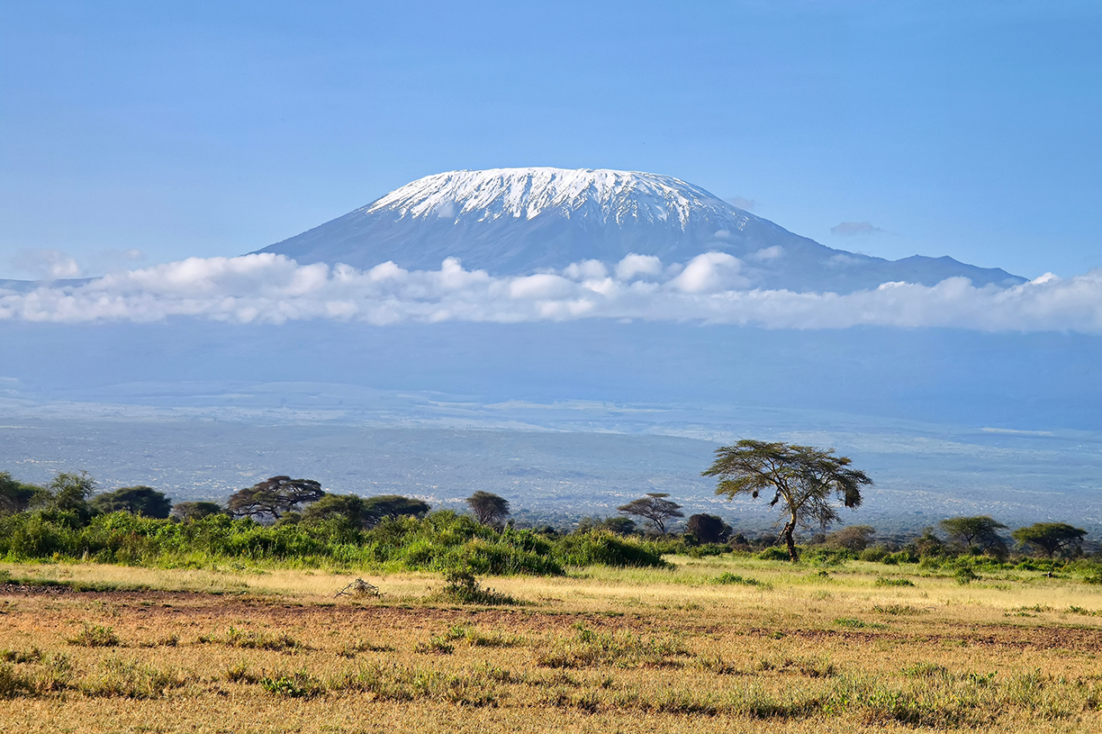
Mount Kilimanjaro stands as Africa’s highest peak at 5,895 meters and remains one of the world’s most accessible high-altitude climbs. Unlike technical mountaineering expeditions, Kilimanjaro requires no specialized climbing equipment, making it achievable for determined hikers with good fitness levels.
The mountain offers several routes, with the Machame and Lemosho routes being particularly popular for their scenic diversity and better acclimatization profiles. The trek takes you through five distinct climate zones, from tropical rainforest at the base through moorland, alpine desert, and finally to the arctic summit zone.
Most climbers spend five to nine days on the mountain, with longer routes offering better success rates due to improved acclimatization. The sunrise view from Uhuru Peak, standing above the clouds with glaciers surrounding you, creates a truly transcendent experience that justifies every challenging step.
2. Table Mountain, South Africa
Overlooking Cape Town, Table Mountain provides one of the world’s most iconic urban hiking experiences. The flat-topped mountain rises 1,085 meters above sea level and offers over 350 routes to its summit, ranging from easy walks to technical rock climbs. The most popular hiking route, Platteklip Gorge, takes approximately two to three hours and rewards hikers with panoramic views of the city, coastline, and surrounding peaks.
The mountain sits within Table Mountain National Park, which protects an extraordinary biodiversity hotspot. Hikers can observe unique fynbos vegetation found nowhere else on Earth, along with rock hyraxes and numerous bird species. For those seeking a less strenuous option, the rotating cable car provides access to the summit, though hiking up and riding down offers the best of both worlds.
Related Post: What are the Best Safari Destinations in Southern Africa
3. Simien Mountains, Ethiopia
The Simien Mountains form one of Africa’s most dramatic mountain ranges, characterized by jagged peaks, deep valleys, and sheer cliff faces dropping thousands of meters. This UNESCO World Heritage Site offers multi-day trekking experiences through landscapes often compared to the Grand Canyon, with the added benefit of endemic wildlife including the endangered Ethiopian wolf, the Walia ibex, and the charismatic Gelada baboon.
Trekkers typically spend three to ten days exploring the range, with Ras Dashen at 4,550 meters being the highest peak in Ethiopia and the fourth highest in Africa.
The combination of spectacular geology, unique wildlife, and traditional mountain communities makes the Simien Mountains an unparalleled hiking destination. The best time to visit is during the dry season from October to March when trails are most accessible.
4. Mount Kenya, Kenya
Mount Kenya, Africa’s second-highest mountain at 5,199 meters, offers a more technical climbing experience than Kilimanjaro. While the summit requires rock climbing skills, the mountain’s lower peaks and surrounding trails provide excellent hiking opportunities for all levels. The Sirimon-Chogoria traverse is particularly popular, taking hikers through pristine mountain forests, bamboo zones, and alpine moorlands decorated with giant groundsels and lobelias.
The mountain has three main peaks including Batian, Nelion, and Point Lenana. Each peak presents different challenges, with Point Lenana being accessible to well-acclimatized hikers without technical climbing skills.
The dramatic landscape includes glacial valleys, turquoise tarns, and unique Afro-alpine vegetation. Mount Kenya National Park’s diverse ecosystems support elephants, buffalo, and various antelope species at lower elevations.
5. Drakensberg Mountains, South Africa and Lesotho
The Drakensberg, or “Dragon Mountains,” form a 1,000-kilometer mountain range offering some of Southern Africa’s finest hiking. The range features dramatic basalt cliffs, rolling grasslands, pristine rivers, and ancient San rock art sites. Popular hiking areas include the Royal Natal National Park, Cathedral Peak, and the challenging climb to the Drakensberg’s highest point, Thabana Ntlenyana, in Lesotho at 3,482 meters.
Hikers can choose from day walks to multi-day backpacking trips, with options ranging from gentle valley walks to strenuous summit attempts. The area’s biodiversity includes bearded vultures, eland, and numerous endemic plant species.
The Amphitheatre, a five-kilometer-long cliff face in Royal Natal National Park, ranks among the most photographed geological features in Africa and can be reached via the challenging chain ladder route.
6. Mount Toubkal, Morocco
Mount Toubkal rises 4,167 meters as the highest peak in North Africa and provides an excellent introduction to high-altitude hiking. Located in the Atlas Mountains, Toubkal can typically be climbed in two days from the village of Imlil, though spending additional days in the area allows for acclimatization and exploration of neighboring peaks and valleys.
The trek combines Berber cultural experiences with stunning mountain scenery, passing through traditional villages where locals maintain centuries-old customs. The best seasons are spring and autumn, when weather conditions are most favorable.
Winter ascents are possible but require ice axes and crampons due to snow and ice on the upper mountain. The summit provides sweeping views across the Atlas range and, on clear days, glimpses of the Sahara Desert to the south.
7. Rwenzori Mountains, Uganda and Democratic Republic of Congo
The Rwenzori Mountains, also known as the “Mountains of the Moon,” offer one of Africa’s most challenging and rewarding hiking experiences. These glaciated mountains rise to 5,109 meters at Margherita Peak on Mount Stanley, making it the third-highest point in Africa.
The range receives heavy rainfall, creating a lush, moss-covered landscape unlike any other African mountain range. Multi-day treks through the Rwenzoris traverse bamboo forests, giant heather zones, and bizarre Afro-alpine vegetation including giant lobelias and groundsels reaching heights of several meters.
The hiking is physically demanding due to muddy conditions and steep, slippery trails, but the otherworldly landscape and relative solitude make it worthwhile for adventurous hikers. The mountains also offer excellent wildlife viewing opportunities, including chimpanzees and forest elephants at lower elevations.
8. Fish River Canyon, Namibia
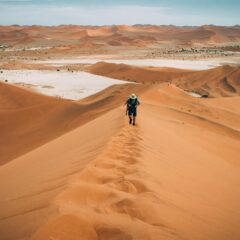
The Fish River Canyon ranks as the second-largest canyon in the world and offers one of Africa’s most spectacular multi-day hiking trails. The 85-kilometer, four to five-day trail follows the canyon floor through dramatic desert landscapes, past hot springs, and alongside the Fish River as it cuts through ancient rock formations over 500 million years old.
The hike is only open from May to September when temperatures are tolerable and flash flood risks are minimal. Hikers must be completely self-sufficient, carrying all food, camping equipment, and water purification supplies.
The canyon’s depth reaches up to 550 meters, with towering cliffs creating a sense of isolation and adventure. The challenging terrain and remote location make this a bucket-list hike for experienced backpackers seeking solitude in dramatic scenery.
9. Mount Meru, Tanzania
Often overshadowed by its famous neighbor Kilimanjaro, Mount Meru provides an excellent alternative or acclimatization climb at 4,566 meters. Located in Arusha National Park, this stratovolcano offers a three to four-day trek through diverse ecosystems including montane forest, moorland, and volcanic landscapes.

The route passes by the dramatic ash cone within the mountain’s horseshoe-shaped crater. Wildlife encounters are common on Mount Meru, with armed rangers accompanying groups through areas inhabited by buffalo, elephants, and occasionally leopards.
The summit day begins in darkness, with hikers reaching Socialist Peak at sunrise to witness spectacular views of Kilimanjaro floating above the clouds. Mount Meru serves as an excellent preparation for Kilimanjaro while being a worthy destination in its own right.
10. Jebel Akhdar, Oman
While technically in Western Asia, Oman’s position at the entrance to the Arabian Peninsula makes it a common extension for travelers exploring Africa. Jebel Akhdar, or “Green Mountain,” rises to 2,000 meters and offers cooler temperatures and agricultural terraces growing roses, pomegranates, and walnuts.
The area features dramatic wadis (canyons), traditional villages, and the famous Balcony Walk trail offering spectacular views.
Hiking in Jebel Akhdar combines natural beauty with cultural immersion, as trails pass through ancient villages where residents maintain traditional lifestyles. The best time to visit is October through April, avoiding the extreme summer heat. The rose harvest in April provides a particularly fragrant and colorful experience.
11. Mulanje Massif, Malawi
The Mulanje Massif rises dramatically from the surrounding plains, with Sapitwa Peak reaching 3,002 meters as the highest point in Central Africa. This massive granite formation offers excellent hiking through montane grasslands, forest patches, and across exposed plateaus. Several rustic mountain huts provide shelter for multi-day treks, though carrying supplies is necessary.
The massif’s unique ecology includes endemic plant species and the critically endangered Mulanje cedar. Hiking routes range from challenging summit attempts to gentler valley walks, with waterfalls, rock pools, and panoramic views throughout. The best hiking season runs from May to October during the dry season.
12. Hoggar Mountains, Algeria
The Hoggar Mountains in southern Algeria offer a unique Saharan hiking experience, with volcanic peaks rising from the desert floor. The highest point, Mount Tahat, reaches 2,908 meters and provides views across endless sand dunes and rocky plateaus. The landscape features dramatic rock formations, ancient volcanic plugs, and prehistoric rock art.
Hiking in the Hoggar combines natural beauty with cultural experiences among the Tuareg people who inhabit the region. The area’s remoteness and challenging access add to its appeal for adventurous travelers. The best time to visit is November through March when desert temperatures are manageable.
13. Bale Mountains, Ethiopia
The Bale Mountains offer exceptional hiking through Afro-alpine environments teeming with endemic wildlife. The Sanetti Plateau sits above 4,000 meters as the largest continuous area of Afro-alpine habitat in Africa, providing opportunities to observe the rare Ethiopian wolf in its natural habitat. The varied terrain includes volcanic peaks, alpine lakes, pristine forests, and cascading waterfalls.
Multi-day treks can be arranged with pack horses carrying equipment, allowing hikers to explore remote areas while staying relatively light. The biodiversity includes numerous endemic bird species, mountain nyala, and unique plant life adapted to the high-altitude environment.
Before You Go
These 13 hiking destinations in Africa also rank among the best in the world, offering unparalleled diversity, from the continent’s highest peaks to dramatic canyons and coastal trails.
Are you seeking wildlife encounters, cultural immersion, technical challenges, or simply stunning landscapes? These destinations provide world-class hiking experiences that reflect the natural beauty and geographical variety of Africa.