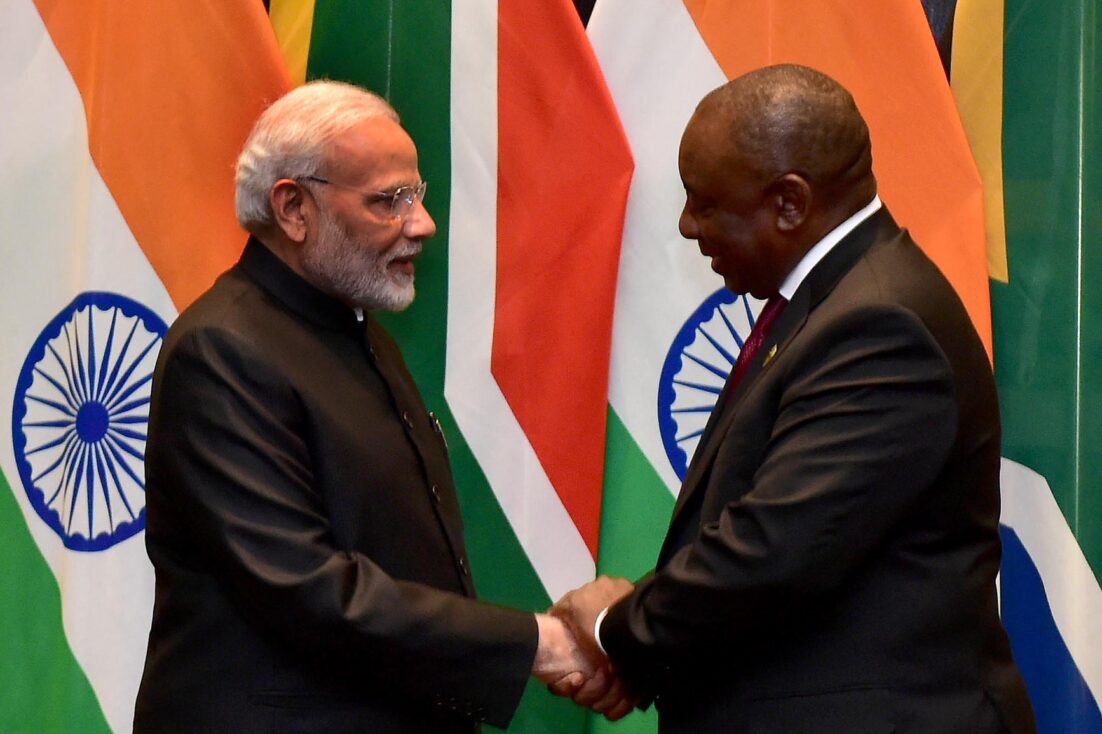
When you think about Africa’s global partnerships, China and Western nations probably come to mind first. But there’s another powerful player that’s been quietly building one of the continent’s most important relationships: India. Over the past two decades, how India became an essential partner for Africa has emerged as one of the most significant geopolitical stories you might not be following closely enough.
This partnership didn’t happen overnight. It’s built on centuries of historical connections, shared colonial experiences, and a mutual understanding that developing nations can chart their own path to prosperity. Today, India’s engagement with Africa spans everything from technology transfers and affordable healthcare to infrastructure development and educational exchanges.
The Historical Foundation of India-Africa Relations
The relationship between India and Africa runs much deeper than recent trade agreements. During the independence movements of the mid-20th century, Indian leaders like Mahatma Gandhi (who spent formative years in South Africa) and Jawaharlal Nehru championed African liberation alongside their own freedom struggle. This created bonds of solidarity that continue to influence how India became an essential partner for Africa today.
The Indian diaspora has also played a crucial role. With approximately 3 million people of Indian origin living across Africa, these communities have served as cultural and economic bridges between the two regions. From small business owners in Kenya to entrepreneurs in South Africa, the Indian diaspora has facilitated trade, investment, and mutual understanding for generations.
1. Trade and investment: The economic backbone
The numbers tell a compelling story. India-Africa bilateral trade has grown from around $7 billion in 2001 to over $98 billion by 2022, making India one of Africa’s top trading partners. This dramatic increase reflects how India became an essential partner for Africa economically.
India’s approach differs from other major partners. Rather than focusing primarily on resource extraction, Indian companies invest across diverse sectors including telecommunications, pharmaceuticals, automotive manufacturing, and renewable energy. Companies like Bharti Airtel have revolutionized mobile connectivity across 14 African countries, bringing affordable communication to millions who previously lacked access.
The pharmaceutical sector deserves special attention. India supplies nearly 70% of Africa’s generic drug requirements, making essential medicines affordable for millions of people. During the COVID-19 pandemic, India provided vaccines and medical supplies to African nations through the Vaccine Maitri initiative, demonstrating how this partnership extends beyond pure commerce into humanitarian support.
2. Infrastructure development with a difference
Infrastructure represents another pillar of how India became an essential partner for Africa. Through Lines of Credit (LoC) exceeding $12 billion, India has financed countless infrastructure projects across the continent. These include power plants, water supply systems, transportation networks, and agricultural facilities.
What makes India’s infrastructure approach distinctive is its emphasis on capacity building. Indian projects typically involve training local workers, transferring technology, and ensuring that African nations can maintain and expand infrastructure independently. This contrasts with approaches that create dependency rather than self-sufficiency.
The Pan-African e-Network Project exemplifies this philosophy. Launched in 2009, it connected 53 African countries through satellite and fiber-optic networks, enabling telemedicine and tele-education services. African medical students could learn from Indian specialists, and patients in remote areas could receive expert consultations without expensive travel. This single initiative touched millions of lives across the continent.
3. Education and capacity building
Education has become central to understanding how India became an essential partner for Africa. Through the Indian Technical and Economic Cooperation (ITEC) program, India has trained over 200,000 African professionals since its inception. These training programs cover everything from IT and entrepreneurship to healthcare and governance.
The impact extends beyond numbers. African professionals trained in India often return home equipped not just with technical skills but with insights into how developing nations can achieve rapid progress despite resource constraints. They’ve seen firsthand how India transformed from an aid recipient to a technology powerhouse, and they bring that optimism and practical knowledge back to their countries.
Indian universities have also opened their doors to African students, with thousands pursuing degrees in engineering, medicine, and other fields. Many receive scholarships from the Indian government, making quality education accessible regardless of financial background. These students form lasting connections that strengthen the partnership for decades to come.
4. Technology transfer and innovation
The digital revolution showcases another dimension of how India became an essential partner for Africa. India has shared its technological innovations generously, particularly in areas where African nations face similar challenges.
Consider the Unified Payment Interface (UPI), India’s revolutionary digital payment system. India has actively supported African nations interested in implementing similar platforms, sharing both technology and implementation expertise. This knowledge transfer helps African countries leapfrog traditional banking infrastructure, just as India did.
Agricultural technology represents another vital area of cooperation. Indian research institutions have developed drought-resistant crops, efficient irrigation systems, and organic farming techniques specifically suited to African conditions. Through partnerships like the India-Africa Forum Summit, these innovations are actively shared and adapted to local contexts.
Space technology might seem like an unlikely area for South-South cooperation, but India has made significant contributions here too. The Indian Space Research Organisation (ISRO) has launched satellites for African nations and provided training for African scientists and engineers. These satellites support everything from weather forecasting and disaster management to agricultural planning and telecommunications.
5. Energy cooperation and sustainability
Energy access remains a critical challenge across Africa, and this is where how India became an essential partner for Africa takes on particular significance. India’s own experience with rural electrification and renewable energy deployment provides valuable lessons for African nations.
The International Solar Alliance, co-founded by India and based in India, specifically targets solar energy deployment in countries between the Tropics of Cancer and Capricorn, including most African nations. This initiative facilitates technology transfer, reduces costs through bulk procurement, and mobilizes financing for solar projects across the continent.
Indian companies have invested billions in African renewable energy projects, from solar farms in Kenya to wind power in South Africa. These investments come with technology sharing agreements that enable local manufacturing and maintenance, creating jobs and building indigenous capacity.
6. Defense and security cooperation
While less publicized, defense cooperation forms an important component of the India-Africa partnership. India has provided training to African military personnel, shared maritime security expertise, and supplied defense equipment on favorable terms. This cooperation recognizes that development requires security and stability.
India’s approach emphasizes capacity building over arms sales. Training programs focus on peacekeeping, counter-terrorism, and maritime security, areas where India has considerable experience. Indian naval vessels regularly patrol the Indian Ocean in coordination with African nations, protecting trade routes vital to both regions.
7. Cultural exchange and soft power
An often overlooked aspect of how India became an essential partner for Africa is the rich cultural exchange between the two regions. Bollywood films have massive followings across Africa, from Nigeria to Kenya, creating cultural connections that complement economic ties. Indian music, fashion, and cuisine have found enthusiastic audiences throughout the continent.

The Indian Council for Cultural Relations actively promotes cultural diplomacy through festivals, exhibitions, and artist exchanges. Yoga has become increasingly popular across African nations, with India sponsoring International Yoga Day celebrations and training programs. These cultural connections create people-to-people bonds that make the partnership more resilient and meaningful.
India has also established cultural centers and language training institutes across Africa, teaching Hindi and other Indian languages while learning African languages and traditions. This two-way cultural exchange reflects the partnership’s foundation in mutual respect rather than one-sided influence.
Cricket provides another cultural bridge. Countries like South Africa, Zimbabwe, and Kenya have strong cricket traditions, and matches between Indian and African teams generate enormous enthusiasm. India has supported cricket development programs across Africa, providing coaching, equipment, and opportunities for African players to train in India.
Related Post >> Most Valuable African Artifacts That Have Been Returned By Europeans
8. Multilateral diplomacy and global advocacy
How India became an essential partner for Africa extends into global diplomatic forums. India has consistently advocated for African representation in international institutions, including supporting permanent African membership in a reformed UN Security Council. This advocacy reflects genuine respect for African agency and aspirations.
At the World Trade Organization, G20, and other multilateral forums, India and African nations frequently coordinate positions on issues affecting developing countries. This solidarity amplifies their collective voice on matters like climate finance, debt relief, and equitable vaccine distribution.
Challenges and the road ahead
The partnership isn’t without challenges. Some critics argue that India could do more, pointing to China’s larger financial commitments. Language barriers, logistical difficulties, and bureaucratic delays sometimes slow project implementation. Additionally, India must ensure its engagement truly serves African priorities rather than simply advancing its own interests.
However, the trajectory remains positive. The India-Africa relationship is built on mutual respect, shared development challenges, and complementary strengths. As both regions continue growing, opportunities for deeper cooperation will only multiply.
A partnership for the Future
As Africa’s population and economies continue expanding, and as India cements its position as a global power, this partnership will likely become even more significant. The foundation has been laid through decades of cooperation in trade, technology, education, and infrastructure. The future promises even greater collaboration as both regions pursue their development aspirations.
For observers of global affairs, the story of how India became an essential partner for Africa offers insights into how international relationships can be structured around shared values and mutual growth rather than dominance and dependency. It’s a partnership worth watching, and one that could serve as a template for collaboration among developing nations worldwide.