The Nigeria-Biafra Civil War stands as one of the most significant and heartbreaking events in Nigeria’s post-independence history. Fought between July 1967 and January 1970, the conflict reshaped the country’s political structure, altered its social fabric, and left deep scars that remain visible decades later.
Although the war officially ended over fifty years ago, its relevance has not diminished. Many of the underlying issues that triggered the conflict still feature prominently in Nigeria’s national conversation today.
This article provides a detailed examination of the background, causes, major events, humanitarian impact, and long-term consequences of the Nigeria-Biafra Civil War, while highlighting the lessons Nigeria and other multiethnic states must learn from it.
Historical Background to the Nigeria-Biafra Civil War
Nigeria gained independence from British colonial rule in 1960 as a federal state composed of diverse ethnic, religious, and cultural groups.
The country was largely divided into three dominant regions: the Northern Region, dominated by the Hausa-Fulani; the Western Region, dominated by the Yoruba; and the Eastern Region, dominated by the Igbo.
While independence generated optimism, it also exposed deep structural weaknesses inherited from colonial governance.
The British administration emphasized regionalism through indirect rule, strengthening ethnic identities while weakening the idea of a unified Nigerian nation. Political power became regionally concentrated, and national loyalty was often secondary to ethnic allegiance.
As a result, political competition quickly turned into ethnic rivalry. Elections in the early 1960s were marred by allegations of rigging, violence, and intimidation. Instead of strengthening democracy, politics deepened suspicion between regions and intensified fears of domination by rival ethnic groups.
By the mid-1960s, Nigeria was politically unstable, socially divided, and struggling to manage its diversity.
The 1966 Military Coups and the Breakdown of Trust
The immediate roots of the Nigeria-Biafra Civil War can be traced to the military coups of 1966. In January of that year, a group of young military officers overthrew Nigeria’s civilian government, assassinating several prominent political leaders.
Although the coup plotters included officers from different ethnic backgrounds, the fact that most of the victims were Northern and Western leaders created the widespread perception that the coup was an Igbo-dominated attempt to seize power. This perception, whether accurate or not, proved disastrous.
Major General Johnson Aguiyi-Ironsi, an Igbo officer, assumed leadership of the country. One of his most controversial decisions was the abolition of Nigeria’s federal structure in favor of a unitary system.
This move intensified fears in the North, where many believed political power was being centralized under Igbo control.
In July 1966, a counter-coup led mainly by Northern officers resulted in Ironsi’s assassination. What followed were violent attacks against Igbo civilians across Northern Nigeria.
Thousands were killed, and hundreds of thousands fled to the Eastern Region in fear for their lives. At this point, trust between Nigeria’s regions collapsed completely.
The Road to Secession: Birth of the Republic of Biafra
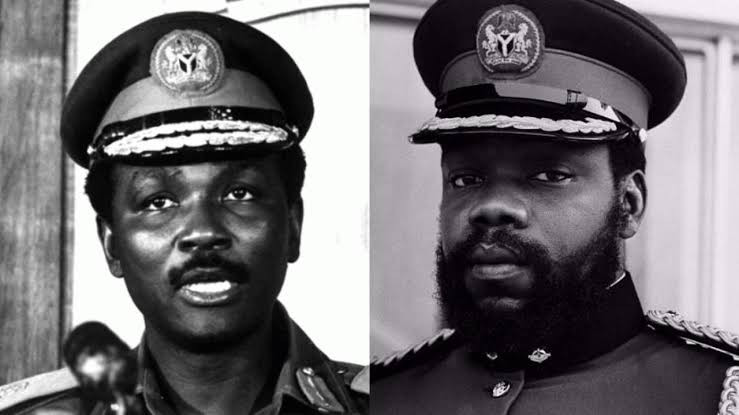
As violence against Easterners continued and negotiations failed, the Eastern Region increasingly felt isolated and unsafe within Nigeria. Colonel Chukwuemeka Odumegwu Ojukwu, the military governor of the Eastern Region, argued that the federal government could no longer guarantee the safety or rights of the Igbo people.
Several attempts were made to resolve the crisis peacefully. The most notable was the Aburi Accord of January 1967, reached during talks in Ghana.
The agreement aimed to restore trust through decentralization and regional autonomy. However, conflicting interpretations of the accord soon emerged, and its implementation collapsed.
On May 30, 1967, Ojukwu declared the Eastern Region an independent state named the Republic of Biafra. The federal government, led by General Yakubu Gowon, rejected the declaration, insisting that Nigeria’s unity was non-negotiable.
By July 1967, federal troops launched military operations against Biafra, marking the official beginning of the Nigeria-Biafra Civil War.
Major Phases of the Nigeria-Biafra Civil War
The war unfolded in several stages. Initially, Biafran forces made significant advances into the Mid-West Region, briefly threatening federal control. However, the federal military soon regrouped and launched a sustained campaign to reclaim territory.
By 1968, federal forces had captured key Biafran cities and imposed a land, sea, and air blockade on the secessionist state. This blockade proved decisive, as it severely restricted the flow of food, medicine, and essential supplies into Biafra.
As the war dragged on, Biafra became increasingly isolated. Despite limited international recognition and support from a few countries, the imbalance in military and economic resources became overwhelming.
In January 1970, Biafran forces surrendered, officially ending the Nigeria-Biafra Civil War.
Humanitarian Crisis and Civilian Suffering
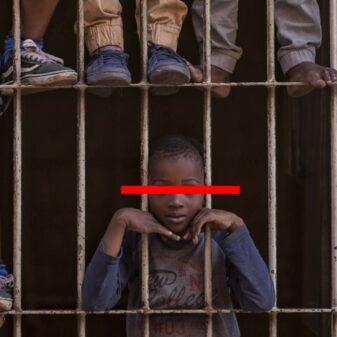
One of the most tragic aspects of the Nigeria-Biafra Civil War was the scale of civilian suffering. The federal blockade of Biafra led to widespread famine, particularly affecting children, women, and the elderly.
Images of malnourished children shocked the international community and marked one of the first times global media brought humanitarian disasters into public consciousness.
International aid agencies, religious organizations, and charities attempted to provide relief, though access was often restricted.
By the end of the war, estimates suggest that between one and three million people had died, mostly from starvation and disease rather than direct combat. The humanitarian catastrophe highlighted the devastating impact of modern warfare on civilian populations.
Political Consequences of the War
Politically, the Nigeria-Biafra Civil War fundamentally altered Nigeria’s governance. The conflict strengthened the military’s role in politics and weakened democratic institutions. For decades after the war, Nigeria remained under military rule, with civilian governance struggling to take root.
The federal government emerged more centralized, with greater control over states and resources. While this helped prevent further secession attempts, it also intensified debates about federalism, restructuring, and regional autonomy.
The war demonstrated how fragile democratic systems can become when political disagreements are not resolved through dialogue and constitutional processes.
Economic Impact and Post-War Challenges
The economic consequences of the Nigeria-Biafra Civil War were severe, particularly for the former Eastern Region. Infrastructure was destroyed, industries collapsed, and many families lost their livelihoods.
One of the most controversial post-war policies was the decision to return only twenty pounds to former Biafrans, regardless of their pre-war bank balances. This policy deepened feelings of marginalization and economic injustice.
Although Nigeria experienced an oil boom in the 1970s, the uneven distribution of wealth continued to fuel regional resentment and economic inequality.
Lessons to Learn from the Nigeria-Biafra Civil War
National Unity and Inclusion
A major lesson of the Nigeria-Biafra Civil War is that national unity cannot be sustained through force alone. Unity must be built on fairness, justice, and inclusion.
When citizens feel excluded or unsafe, loyalty to the state weakens. A nation that fails to protect all its people equally risks fragmentation.
Nigeria’s diversity should be treated as a strength rather than a threat. Inclusive governance, equitable resource distribution, and equal protection under the law are essential for long-term stability.
Leadership and Governance
Leadership failure played a critical role in the escalation of the conflict. Political and military leaders often prioritized pride, power, and regional interests over compromise and empathy.
The war underscores the importance of responsible leadership, especially during moments of national crisis. Leaders must act with foresight, restraint, and a commitment to dialogue.
Decisions made during crises can have irreversible consequences. The Nigeria-Biafra Civil War serves as a cautionary tale for leaders who underestimate the cost of political miscalculation.
Federalism and Power Sharing
The conflict exposed weaknesses in Nigeria’s federal structure, particularly fears of domination and over-centralization. A functional federal system must balance national unity with regional autonomy.
When power is overly concentrated at the center, distrust grows. True federalism requires fair power sharing, fiscal responsibility, and respect for local governance.
This lesson remains central to ongoing debates about restructuring in Nigeria today.
Ethnic Politics and the Danger of Division
Ethnic politics played a significant role in the lead-up to the war. Political competition framed along ethnic lines transformed disagreements into existential threats.
The Nigeria-Biafra Civil War teaches that when ethnicity becomes the primary basis for political loyalty, national cohesion suffers. Leaders and citizens must resist narratives that portray other groups as enemies.
Education, media, and public discourse have a responsibility to promote national unity while respecting cultural diversity.
Conflict Prevention, Dialogue, and Peacebuilding
Perhaps the most important lesson of the Nigeria-Biafra Civil War is that early dialogue could have prevented catastrophic loss of life. Many of the issues that led to war were not impossible to resolve.
Strong institutions, inclusive dialogue, and independent mediation are critical tools for conflict prevention. Once violence begins, options narrow and human suffering escalates rapidly.
Peace must be actively maintained through dialogue rather than enforced through force.
Memory, Reconciliation, and National Healing
After the war, the federal government adopted a policy of “No Victor, No Vanquished” to promote reconciliation. While this approach helped prevent renewed conflict, it did not fully address grievances or provide platforms for healing.
True reconciliation requires acknowledging past suffering, encouraging honest dialogue, and ensuring justice. Suppressing difficult conversations does not erase trauma.
Remembering the Nigeria-Biafra Civil War is not about reopening wounds, but about understanding history in order to build a better future.
Why the Nigeria-Biafra Civil War Still Matters Today
Many of the issues that contributed to the war remain relevant today, including ethnic tensions, economic inequality, distrust in government, and debates about federal restructuring.
The Nigeria-Biafra Civil War serves as a powerful reminder that peace is fragile. Ignoring historical lessons increases the risk of repeating past mistakes.
Learning from history is not optional, it is essential for any nation to survive.
Wrapping Up
The Nigeria-Biafra Civil War was a defining moment in Nigeria’s history, marked by immense suffering, political failure, and irreversible loss. Yet, it also offers invaluable lessons about unity, leadership, inclusion, and the human cost of conflict.
For Nigeria and other multiethnic nations, lasting stability depends on justice, dialogue, and mutual respect. History speaks clearly to those willing to listen.
The responsibility now lies with leaders and citizens alike to apply these lessons and build a more inclusive, peaceful, and united society.