As you may already know, Nigeria, Africa’s most populous country, operates a federal system of government made up of states and a central authority. In each state lies a capital city serving as the administrative headquarters and political nerve center of that state.
Knowing the state capitals in Nigeria is crucial particularly for academic study, governance, geography, civil education, and travel planning. Also, you may want to know about the subject if you’re just seeking general national awareness.
This article covers a comprehensive and detailed list of all state capitals in Nigeria, their significance and the geopolitical zones they belong to. It also provides essential background information that helps you understand how the administrative structure in Nigeria functions.
Nigeria’s Federal System and Administrative Structure
Yes, Nigeria practices a federal system of government. This means that power of governance is constitutionally shared between the federal government and all its states.
Each state, no matter how small, operates semi-independently under the Nigerian Constitution, with its own executive, legislative, and judicial arms.
Every Nigerian state has:
- A governor as the chief executive
- A state house of assembly
- Ministries and agencies that manage education, health, infrastructure, and internal affairs
- A capital city where these institutions are located
Contrary to the opinion of many, the state capital is more than just a symbolic location. It is the center of governance, public administration, and political coordination for each state.
How Many States and Capitals Does Nigeria Have?
At the moment, Nigeria has:
- 36 states
- 1 Federal Capital Territory (FCT)
As I mentioned earlier, each of the 36 states has one officially designated capital city. The Federal Capital Territory also has a capital, Abuja, which serves as the seat of Nigeria’s federal government.
This results in a total of 37 capital cities within Nigeria’s administrative framework.
Importance of State Capitals in Nigeria
Why are there state capitals at all? Well, these capitals play a vital role in the proper functioning of the Nigerian state system. Let’s check out these roles.
Political Importance
State capitals, both in Nigeria and other parts of the world, host the offices of governors, deputy governors, commissioners, and legislators. Major political decisions concerning the state are made within these capital cities.
Administrative Importance
Most ministries and agencies are headquartered in state capitals, hence the majority of civil servants work from there. These institutions handle taxation, land administration, public works, and social services.
Economic Importance
Aside from being political hubs, most capitals are also economic hubs of their states. They attract businesses, markets, banks, and investors due to government presence and better infrastructure.
Social and Cultural Importance
Although not always the case, state capitals sometimes house major cultural institutions, museums, stadiums, and traditional councils that reflect the identity of the state. An example is the famous Fela Shrine, where “Afrobeat” all began, located in Ikeja, the capital city of Lagos state.
Complete List of All State Capitals in Nigeria
This section presents the full list of all Nigerian states and their capitals in alphabetical order for easy reference.
Abia State
Capital: Umuahia
Abia State is located in the South East region of Nigeria. Umuahia serves as the administrative center, while Aba is the commercial hub of the state.
Adamawa State
Capital: Yola
Yola lies along the Benue River and functions as the political headquarters of Adamawa State in the North East.
Akwa Ibom State
Capital: Uyo
Uyo is a planned city that hosts government institutions and is one of the fastest-growing capitals in southern Nigeria.
Anambra State
Capital: Awka
Awka is an ancient town known for blacksmithing traditions and now serves as the political capital of Anambra State.
Bauchi State
Capital: Bauchi
Bauchi is an important administrative city in the North East and serves as a gateway to several northern trade routes.
Bayelsa State
Capital: Yenagoa
Yenagoa became a state capital in 1996 following the creation of Bayelsa State and plays a key role in Niger Delta administration.
Benue State
Capital: Makurdi
Makurdi lies along the Benue River and is known for its agricultural administration and transport connections.
Borno State
Capital: Maiduguri
Maiduguri is a major urban center in the North East and serves as the seat of government for Borno State.
Cross River State
Capital: Calabar
Calabar is one of Nigeria’s oldest cities and functions as both a political and tourism center.
Delta State
Capital: Asaba
Asaba was designated the capital in 1991 and sits on the western bank of the Niger River.
Ebonyi State
Capital: Abakaliki
Abakaliki is a relatively young capital city and serves as the administrative heart of Ebonyi State.
Edo State
Capital: Benin City
Benin City is historically significant and remains a major political and cultural center.
Ekiti State
Capital: Ado-Ekiti
Ado-Ekiti functions as the governmental headquarters of Ekiti State in the South West.
Enugu State
Capital: Enugu
Enugu is known for its coal mining history and remains an important administrative city.
Gombe State
Capital: Gombe
Gombe serves as the political center of Gombe State and a transit hub in the North East.
Imo State
Capital: Owerri
Owerri is a planned city that hosts state institutions and educational establishments.
Jigawa State
Capital: Dutse
Dutse became the capital following the creation of Jigawa State in 1991.
Kaduna State
Capital: Kaduna
Kaduna is one of Nigeria’s major northern cities and a historic administrative center.
Kano State
Capital: Kano
Kano is one of the oldest cities in West Africa and serves as both a political and commercial capital.
Katsina State
Capital: Katsina
Katsina has deep historical roots and functions as the administrative headquarters of the state.
Kebbi State
Capital: Birnin Kebbi
Birnin Kebbi serves as the political center of Kebbi State in the North West.
Kogi State
Capital: Lokoja
Lokoja is historically important as the first administrative capital of modern Nigeria.
Kwara State
Capital: Ilorin
Ilorin serves as the political headquarters of Kwara State and bridges northern and southern cultures.
Lagos State
Capital: Ikeja
Ikeja is the administrative capital, while Lagos city remains the economic hub.
Nasarawa State
Capital: Lafia
Lafia serves as the state capital and a major administrative town in the North Central region.
Niger State
Capital: Minna
Minna hosts state government institutions and serves as a key transport junction.
Ogun State
Capital: Abeokuta
Abeokuta is historically significant and functions as Ogun State’s political headquarters.
Ondo State
Capital: Akure
Akure is a traditional town that also serves as a modern administrative capital.
Osun State
Capital: Osogbo
Osogbo is known for its cultural heritage and hosts the Osun State government.
Oyo State
Capital: Ibadan
Ibadan is Nigeria’s largest city by land area and serves as Oyo State’s capital.
Plateau State
Capital: Jos
Jos is located on a plateau and serves as an administrative and tourism center.
Rivers State
Capital: Port Harcourt
Port Harcourt is a major oil city and the administrative heart of Rivers State.
Sokoto State
Capital: Sokoto
Sokoto is a historic Islamic center and serves as the state capital.
Taraba State
Capital: Jalingo
Jalingo became the capital after Taraba State was carved out of Gongola State.
Yobe State
Capital: Damaturu
Damaturu functions as the administrative headquarters of Yobe State.
Zamfara State
Capital: Gusau
Gusau serves as the political center of Zamfara State.
The Federal Capital Territory and Abuja
Abuja is Nigeria’s national capital and is located in the Federal Capital Territory. It was officially designated as the capital in 1991, replacing Lagos. Abuja was chosen due to its central location, neutrality, and availability of land for planned development.
Unlike other states in Nigeria, the FCT is governed by a minister appointed by the President, and Abuja hosts the presidency, National Assembly, Supreme Court, and foreign embassies.
Nigerian Geopolitical Zones and Their Capitals
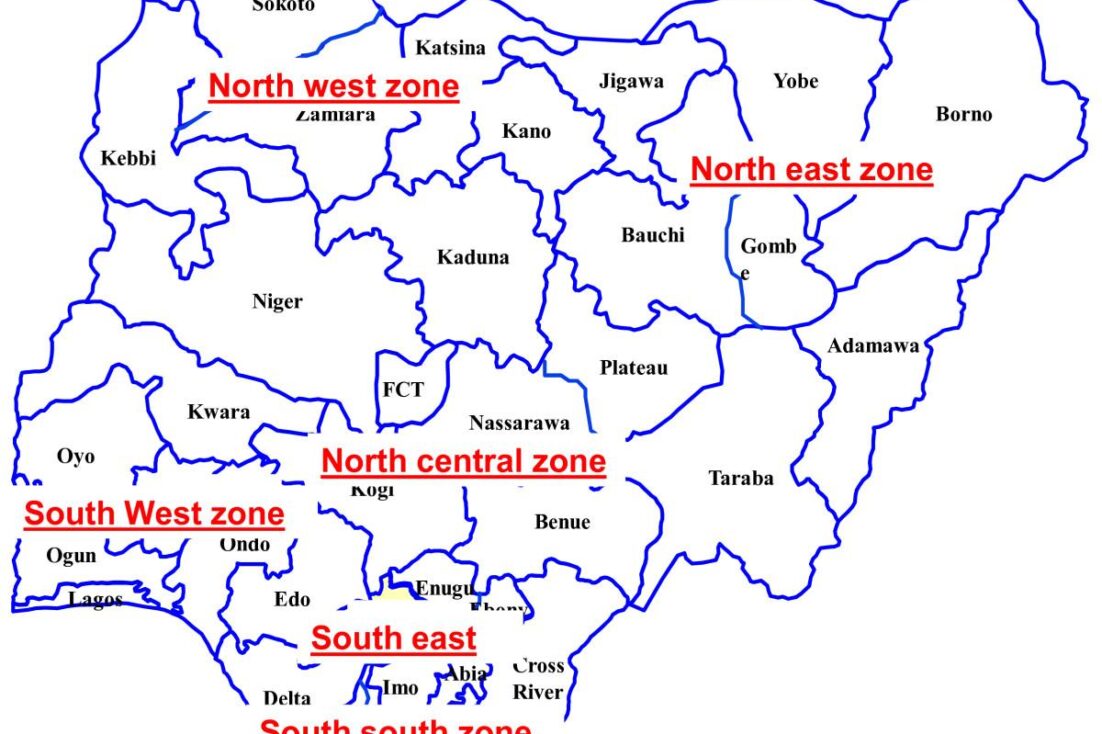
Geopolitical zones are crucial in the study of the Nigerian administrative structure, whether for academics, history, or government. All the 36 states in Nigeria are grouped into six geopolitical zones for administrative and political balance.
North Central
Makurdi, Lokoja, Ilorin, Lafia, Minna, Jos, and Abuja.
North East
Yola, Bauchi, Maiduguri, Gombe, Jalingo, and Damaturu.
North West
Dutse, Kaduna, Kano, Katsina, Birnin Kebbi, Sokoto, and Gusau.
South East
Umuahia, Awka, Abakaliki, Enugu, and Owerri.
South South
Uyo, Yenagoa, Calabar, Asaba, Benin City, and Port Harcourt.
South West
Ado-Ekiti, Ikeja, Abeokuta, Akure, Osogbo, and Ibadan.
Common Confusions About State Capitals in Nigeria
Many people, including Nigerians themselves, assume that the most popular or commercial city in a state is the capital. This is not always correct.
A typical example is Ava which is usually confused as the capital of Abia state due to its commercial standing in Nigeria. The political and administrative capital of Abia state is Umuahia.
Other examples include:
- Warri is not the capital of Delta State
- Onitsha is not the capital of Anambra State
- Lagos city is not Lagos State’s capital
Before You Go
Nigeria’s 36 state capitals and the Federal Capital Territory form the backbone of the country’s administrative and political system. Each capital plays a crucial role in governance, economic coordination, and regional development.
Knowing the complete list of all state capitals in Nigeria is essential for students, researchers, policymakers, and citizens who want a clear understanding of how the country is organized.